
Myopia (nearsightedness)
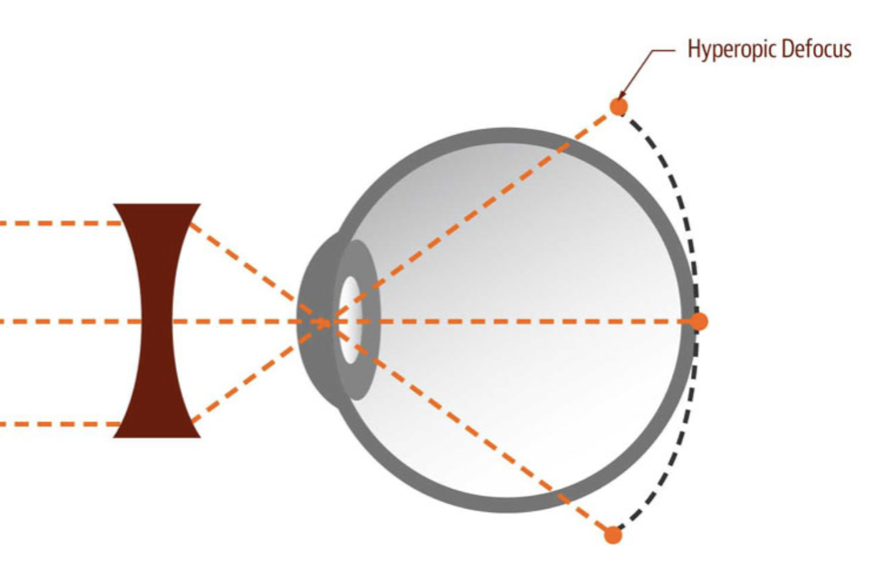
As the eyeball gets longer, the amount myopia increases. Experts are still unsure of the exact cause of myopia, but suspects it to be a combination of genetics and environmental factors. Researchers believe myopia progresses due to peripheral hyperopic defocus caused by traditional spectacle lenses. With traditional correction, peripheral images are out of focus, falling behind retina. It is thought this hyperopic defocus creates a stimulus for axial growth of the eyeball. Current optical treatments moves the peripheral focus to in front of the retina.
Slowing the Progression of Nearsightedness
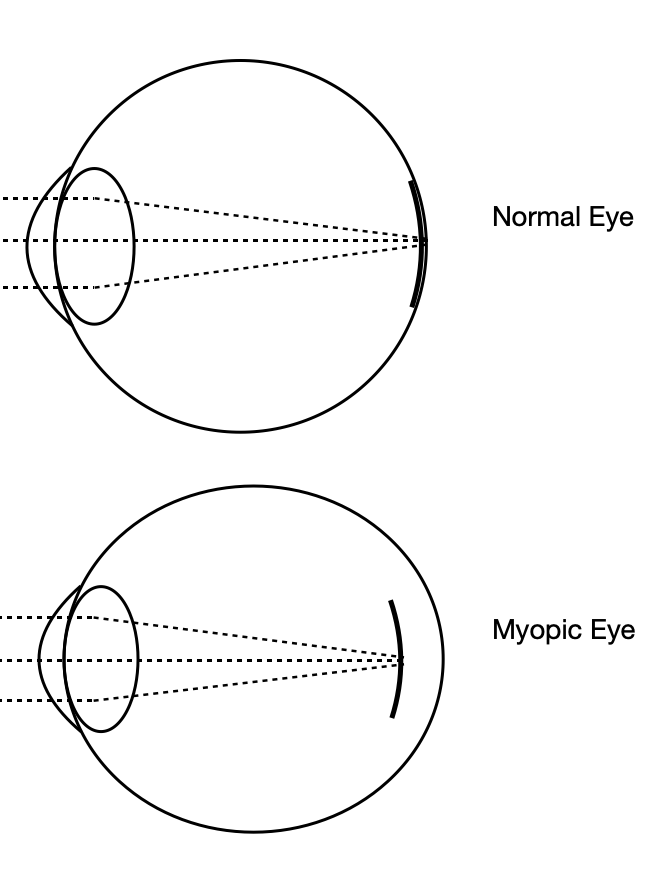
Myopia (nearsightedness) is a common refractive error, where the eyes are unable to focus clearly on distance images. Light normally focuses on the retina (light-sensitive lining inside the eye) for clear distance vision. In a person with myopia, the eye is too long and light is focused in front of the retina instead, making distance vision blurry.
Lifestyle Changes
Spend time outdoor
While there is no proven link, studies suggest that children who spend more time indoors doing near-focused activities have higher rates of myopia than those who spend more time outdoors.
*Recommended at least 120 minutes per day of outdoor time
20-20-20 Rule
Take regular breaks from close work.
* Recommended for every 20 minutes of close work, spend 20 seconds looking into the distance about 20 ft away
Good working environment
Reading and digital device usage should be performed at least 12 inches away and have good lighting.
Limit screen time
Recommended less than 1 hour of screen time after school.
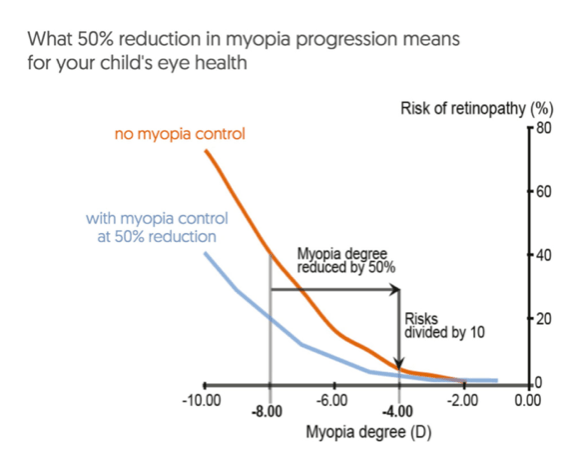
We now seek ways to slow down the changes to eye shape, which is called “Myopia Management”. The options we offer are…
MiSight 1-Day Contact Lenses
These are soft daily disposable contact lenses dual-focus lens design with alternating distance vision correction and treatment zones of defocus. The two treatment zones create myopic defocus with image focusing in front of retina, rather than behind it to slow axial elongation.
MiSight 1 Day clinical trial for children aged 8-12 years found after 3 years, slows myopia progression by 59%
Further recent data indicates children age 11-15 years may also benefit from myopia progression, and continued MiSight wear up to six years appears beneficial in slowing myopia progression.
This is the only FDA and Health Canada approved method for myopia intervention.
Myopia Control Spectacles
These are special glasses with lenses that manipulates peripheral light to focus on the retina instead of behind it.
Zeiss MyoVision showed a 20% myopia control effect in a one year study for children 6-16 years old.
Hoya Miyosmart lenses showed a 60% myopia control effect in a two year study for children 8-13 years old.
Atropine Therapy
Low-dose atropine (0.01-0.05%) is used off-label to slow myopia progression. The exact mechanism of action for slowing progression is not fully understood, however the safety profile has shown to be acceptable; minimal to no side effects.
These drops can be used patients with any amount of nearsightedness and drops are instilled once at bedtime.
Studies have shown atropine therapy slows myopia progression by about 60%.
 Dr. Winnie Chen and Associates