
Dry Eyes
Symptoms:
• Burning sensation
• Itching
• Watering
• Light Sensitivity
• Red Eyes
• Foreign Body Sensation/ Grittiness
• Intermittent Blurry Vision
What is dry eye syndrome?
It is a common ocular surface condition affecting people of all ages. It occurs when there is an insufficient volume and/or quality of tears to keep the surface of the eye sufficiently lubricated. The tear film is made up of 3 different layers:
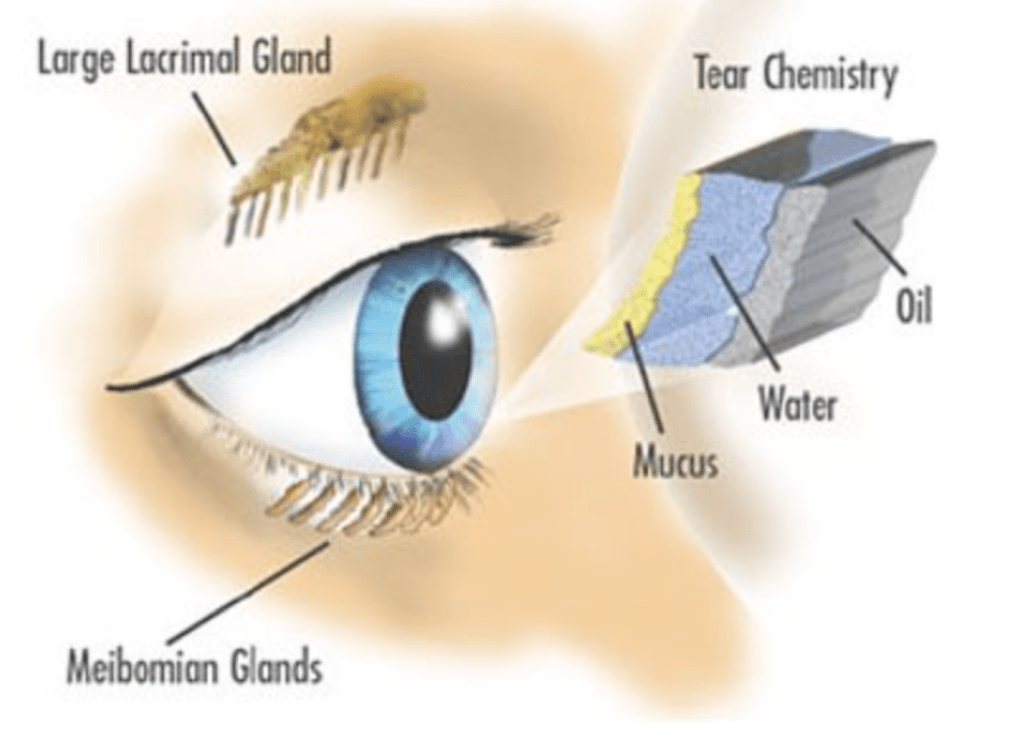
1) Mucus layer: adheres tears to eye
2) Water layer: contains water/nutrients
3) Oil layer: prevent tear evaporation
Common Causes:
- Anterior Blepharitis: Inflammation of the eyelids
- Meibomian Gland Dysfunction
- Medication such as antihistamines and antidepressants
- Diseases such as rheumatoid arthritis, thyroid disorders, and Sjogren’s syndrome
- Activities that reduce blinking
- Prolonged reading/computer screen
Anterior Blepharitis
There are certain bacteria normally found on the face and lids. If they become excessive, the lid area can react to these bacteria causing an inflammatory response.
Meibomain Gland Dysfunction
The oil (lipid) layer is produced by the Meibomian glands in the eyelids, which prevents evaporation of the tear film. In Meibomian Gland Dysfunction, these glands become clogged leading to evaporative dry eye. In this case, the oil layer is missing or is of poor quality, tears evaporate too quickly, and the tear film becomes unstable and symptoms of dry eye can occur.

Dry eye is chronic and progressive, meaning your symptoms will reoccur or worsen if not treated. Here are some simple dry eye treatments:
Warm Compress and Lid Hygiene
Heated eye mask can help soften the clogged oil in the eyelid glands and improve the lipid tear film layer.
Commercially available lid wipes (extra benefits of moisturizing the eyelids) help clean the eyelids by removing debris and bacteria.
Artificial Tears
Artificial tears can supplement the tear film quality.
We carry I-DROP viscoadaptive preservative-free artificial tears. These eye drops enhances all 3 layers of tear film, reduces tear film evaporation, and offers immediate comfort and long-lasting hydration.
Lifestyle Changes
Omega-3 Fatty Acids can improve the oil in your eye lid glands and relieve dry eye symptoms. Natural sources include flaxseed, canola oil, chia seeds, walnuts, oily fish (tuna, salmon). Omega-3 is also available as a nutritional supplement.
You may also forget to blink regularly when using digital devices or concentrating extra-hard. Blinking refreshes and spread tears over the surface of the eye.
 Dr. Winnie Chen and Associates